
The Lord Knows What We Need When we Need It: Erin's Story
This post may contain affiliate links which means I may be paid for products you purchase through my links. See my full disclosure for more.
Have you ever had an experience that you just didn’t understand…. that is until later when all the pieces of the puzzle come together? Today, Erin, from Seek this Jesus Study, shares a story from her mission and how the Lord knew what someone needed and how to make that happen. In the beginning, it was a little frustrating for some people, but in the end, it all made sense.
Save it for later, pin it now!

Watch or Listen
Listen to the podcast here or head to your favorite podcasting app to listen on the go. Find Erin online at Seek this Jesus Study or on Instagram @seekthisjesusstudy
Read the Script
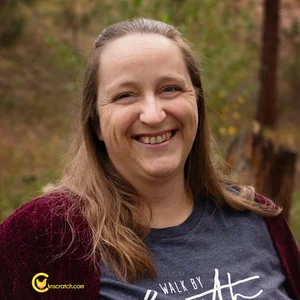
Camille: Welcome to Chatting with Camille, helping you share the gospel of Jesus Christ at church, home, and beyond. Today we have Erin. Erin lives in northern Utah with her husband and three daughters. She enjoys reading, organizing, spending time in the mountains, watching soccer games, and four-wheeling. As a former kindergarten teacher, Erin loves helping others discover their own learning styles. She started Seek this Jesus Study to share quick and easy ways to study scriptures, general conference talk, Come Follow Me, and the names of Christ, all while catering to those personal learning styles.
Welcome, Erin. We're so excited to have you come and share your story with us.
Erin: Thank you, Camille. I'm excited to be here today. I'm going to share a story from my mission. I had the opportunity to serve a mission in Ecuador Guayaquil Missions many years ago. I want to tell a story about a couple that we were teaching at the time.
For a little bit of background on this, Wilson and Lucia lived in Cuenca, Ecuador. They had five sons and Wilson was an auto mechanic and his five sons also worked in the auto industry with him in his mechanic shop. At the time that I met Wilson and Lucia- we actually met them when we had to switch areas with the Elders. Our mission president just asked us to switch areas with them. We went to that new branch and met Wilson and he and Lucia had been investigating the church for probably about nine months. Wilson actually at the time, even though he wasn't baptized, was actually teaching a lot of the Elders Quorum lessons because there were not members to do it at the time.
Wilson was really, really excited for his baptism and he had a date and he actually got baptized while I was there but the elders had done all the teaching. Wilson was baptized and Lucia was really, really hesitant so my companion and I were continually teaching Lucia. We'd meet with her often. There was one day that came up that we always did a three-hour service every week and our service project that we had planned in advance fell through. So my companion and I were in our P-Day clothes so that we could do service. We were in a pair of jeans and t-shirts we decided we would stop by Lucia's house to serve her because like I said, her husband was a mechanic. If you could imagine, his clothing when he came home from work as a mechanic and his five sons.
In Ecuador, they do not have washing machines. Most people did not at the time. I don't know if they do now. The women usually would wash clothes by hand, scrubbing them on rocks with a bar of soap, and then also with their hands. We decided we would stop by and help Lucia with her work that day. And as we got there to her house, we were trying to sweep the floor and help her, and she just kept getting really mad at us. And finally, she said, just sit and read. With my companion and I sat there and we decided we would read with her Alma chapter five.
As we were reading that, it was interesting. As we're sitting there just in a pair of jeans and a t-shirt, we got to verse 14 in Alma chapter five, where it says Have you spiritually been born of God? Have you received His image in your countenances? And Lucia just looked at us. She thought for a minute, tears came to her eyes, and she said, “I have.” She said, “I'm ready to be baptized.” From this experience, I learned really quickly that the Lord knows each and every one of us. He knows what we need when we need it, and how we need it. As we sat there, learned from her that as we serve others, we realized how much the Lord is involved in the details of our lives and gives us opportunities to help in his work.
Lucia, as I said, she decided to be baptized. She was baptized, I think about, it was only like a week later because she had already had all of the lessons and she was just trying to finish her little investigation and to know for herself. But this experience was really also very touching to me because I realized how Heavenly Father knows who can help certain people. And when He was very instrumental, I guess, in the changing of the missionaries that were serving her. Not that I was anything special, but I think Lucia needed sisters. She needed somebody who could relate to her and the work that she was doing. That was the experience that I had and that just that Heavenly Father really truly knows what we need and how we need it.
Camille: I love that you pointed out that you didn't really know why the mission president decided to swap you guys. He just did, and then you figured that out later. I love that the little trust that comes with that- faith that they know what they're doing.
Erin: The elders weren't very happy about that because they had Wilson ready to be baptized and they got moved and then we were the ones that were there when Wilson was baptized.
Camille: Mm-hmm. That's neat.
Erin: It was a fun experience and it was fun to go back and think about that again. And actually, I pulled up my letters home that I had written at that timeframe to kind of remember some of the details that had happened. It was just a really neat experience of how Heavenly Father orchestrates these little miracles or tender mercies, whatever you want to call them, to make things work for his children.
Camille: What did that experience teach you about allowing God to prevail in our lives?
Erin: The big thing that letting God prevail is that, I loved studying about all that- all the promises to Covenant Israel- is that He knows us individually. There's that promise especially through the Old Testament that we're reading now that He knows us individually. He'll come and meet us wherever we are and that He actually knows who to send and when at the right time and that He doesn't forget. His children. That is like the biggest thing I think, in that He knows us and that He does not forget and that He has a plan.
Camille: Mm-hmm. Yeah. He does not forget. How was the service? So you mentioned how you were going to go and do service, but then that fell through and you went to her house instead. Do you think the service allowed for that opportunity to present itself or it just happened because that's the way it happened?
Erin: I really think service opens the doors for missionary work in more instances than not. I think when we have service projects, we invite our neighbors to be a part of it, that is a very intrusive way to get them to rub shoulders with other people and to get to know them and to serve them. Even finding things to do to serve other people opens the door for missionary work. And then you just have opportunities that you can share, like your thoughts and feelings about family, and find neutral ground that you both believe. You can also find mutual ground, even talking about Heavenly Father and Jesus Christ sometimes, you know. But it takes building that trust and that friendship that comes through service.
Camille: Absolutely. I was thinking about the four things of the work of salvation and exaltation, right?
Erin: Yes.
Camille: And one of those things is caring for the needy or just caring for each other basically. Service is definitely a way we can do that. I mean, we should be sharing the gospel, but caring for them is just as important and allows for those opportunities. It's all part of it.
Erin: On my mission, I was called as a welfare service missionary. I had training when I went to the missionary training center for six weeks on welfare service. It's interesting that if people do not have their physical needs met, you cannot fulfill spiritual needs. People need to have all that physical stuff done that usually happens through service. Through helping them, even teaching them about how to purify their water so they're not sick all the time or different things like that. It's in those opportunities that come up through service. Like we would teach classes to just anyone in Ecuador on how to purify your water and how to boil water so that you don't get sick. It was open to everybody. But it opened doors later on that you could teach them more about Jesus Christ.
Camille: Mm. Great work to do. That's great. Well, I know one of the big things that you do is we all learn in different ways.
Erin: Yes.
Camille: And you like to share those different ways and how we can use those to study the scriptures, share the gospel, et cetera. As we share the gospel with others, how can we recognize those different learning styles in them so then we can teach them in the way that they actually learn best?
Erin: That is a very, very good question I love talking about learning styles. I wanted to share really quickly one little scripture in 2 Nephi 31:3. It says, this is Nephi talking. He says, “For my soul the delighteth in plainness; for after this manner doth the Lord God work among the children of men. For the Lord God giveth light unto the understanding; for he speaketh unto men according to their language, unto their understanding.”
This is just a reminder that the Lord speaks to us in our language. We serve others in their language, and we can also teach others in their own language. So if you have someone that you are teaching that cannot sit still, they are a hands-on learner. You need to give them things that they can move with or use their hands with, or play games in different ways to teach them about the gospel.
You can usually, by talking to somebody, find out if they like to be in a group of people or not to find out if they are a social learner or if they are more of an individual person that likes to just do things individually on their own and like to think and ponder and journal.
That's three of the eight learning styles. There's hands-on learners that I talked about. There's our social learners that like to be together. They like group settings. Also, we've got people that are just more intrinsic, just like to be within themselves more with the individual learner.
Camille: That's great. Great examples too. It's so important to remember because the Lord does want to speak to us in our language, right? And we can absolutely hear him better when we play into those strengths. Absolutely.
Erin: I mean like some people are music learners and they really connect with Heavenly Father and Jesus Christ through music. One thing that I like to teach people is scripture study and gospel learning does not have to look a specific way for it to count. I don't know about you, but when I was growing up, it just seemed like you had the seminary, you know. They said you've gotta read 10 minutes every night to get on the 180-day consecutive reading board, you know?
It was like a specific thing that you had to do. You had to sit and read for 10 minutes. Well, I like to share with people that we can get things, from the scriptures in lots of different ways. We can listen to the scriptures. We can read the scriptures, we can watch scripture movies. I mean, the Church has come out with some wonderful, the Book of Mormon videos and the Bible videos and they are usually word for word from the scriptures, but they've got music and video put to them for our visual people that really just need something different.
Camille: Yeah, it makes a big difference. What are some unique gifts that you maybe have noticed that women might naturally have that help them share the gospel?
Erin: One of the big gifts I think that women have is we're not afraid to share our feelings in what we believe in certain circumstances. I think when we're in small groups, we're really more open to share what we think and feel. And I think too, on social media, we're more willing to share our thoughts and feelings when you don't know exactly who it's going to. If that makes any sense but then I just, I also think we just have that innate desire to share and to love people. That is one of the biggest ways we can share the gospel is just by loving people how they are and where they are and just showing that love to them.
Camille: Yeah, absolutely. I agree. Women are wonderful. Why is knowing your unique learning style so important and what difference have you seen it make in others?
Erin: Knowing your learning styles opens a whole new world of possibilities in gospel study. And knowing that it doesn't have to look a certain way for it to count. I think knowing your learning styles brings more joy. It's something you actually look forward to. One of my learning styles is I am a book learner. I do love to read out of the scriptures. But I know a lot of people that that is not their strength. That is the thing that is so powerful about learning styles that you can acquire information through reading, listening, watching, sharing.
There's so many different ways that you can learn from the scriptures and different ways that will connect you with Heavenly Father and Jesus Christ. And it doesn't have to look a certain way. Several people that I know, the things that I've shared with them, it's just open to a whole new world that they thought, I never thought I was spiritual enough because I didn't do things the right way. You know, whatever that is. And I really think just lately in the, probably in the last 10 years, with prophets and apostles have really, really taught that connection with Heavenly Father and Jesus Christ looks different than what maybe some of us were grown up and taught the ways that we needed to do things. Like we had to kneel by our bed to say our prayers, or we had to read the scriptures out of a book for a specific amount of time for it to count.
Camille: I don't remember who said it, but in General Conference a few years ago, they mentioned how Nephi, Moses, the brother of Jared; they all came to a body of water, but they all did it differently to get across. Right?
Erin: Yes.
Camille: And different isn't bad. And it isn't wrong. It's just that's the way we work.
Erin: If you just think even just about Nephi, I mean in him building a ship. He went to the mountain by himself, but he came down and worked with his family. So he's using his individual learning style, he's using social; it's obviously hands-on. He's building a ship, but then he would receive instruction from time to time of what to do next. And that's really what our STEM learners, which are the science, technology, engineering, math. They are sequential people. He also did things that way. He was shown, it says shown from time to time. So he had a vision of what he was creating because He'd probably never built one.
Camille: Right. And seeing that would make all the difference.
Erin: It's just interesting reading through the scriptures that you do see the different learning styles of the different people that are in the scriptures. Like Enos, he's out in nature hunting and that is a learning style to be a nature learner.
Camille: Tell us where we can learn more about these unique learning styles and find you so that we can use our own strengths.
Erin: I have a website, Seek this Jesus Study. On there I have free sheet that has all the eight different learning styles and a brief description of each that you can go and get for free off of my website. I'm also on Instagram @SeekthisJesusStudy. I am on Facebook, but I'm not there as much as I am on Instagram. Instagram's kind of my main social media, place that I'm at.
Camille: So we have questions head to Instagram.
Erin: Yes, DM me if you've got any new questions and you can find out what your personal learning styles are. You do have more than one. That is one thing that I tell everyone too. We have lots of learning styles and we can incorporate all of them into our study. And so that's what makes your gospel study a lot more exciting and interesting. When you know, today, I'm going to try it this way or tomorrow, change things up a little bit and try something different. It all works.
Camille: That's a great idea so you don't get bored of reading the scriptures. We don't ever want that.
Erin: One day you could listen to them. One day you could read them. One day you could, you know, find it. We're going to be here in Isaiah and there's lots of, songs that come from the book of Isaiah. We can start listening to handles Messiah or something.
Camille: Right. Well, and I bet as you mix up those learning styles, you're definitely making different connections and having different aha moments than you would before. I love that. That's a great idea.
Erin: You think those different things too, like when you're just teaching Come Follow Me to your kids at home. We do it nightly usually at our house. We do just a little section every night and we're incorporating different things each night can bring a little more excitement and something that people look forward to.
Camille: Thank you Erin. I appreciate you coming on and sharing your story and your talents with us. That's wonderful. Definitely go check her out at Seek This Jesus study.
Want to have more gospel conversations with your family? Come to my Market and check out my gospel games at Cknscratch.com, where you can have all kinds of fun, simple conversations while playing a game. Because the more we talk about the gospel, the easier it is.


Teaching ideas for “How Can I Show Greater Love to Those around Me?”